Qianxi Chestnut vs Other Chinese Chestnut Regions: Why Choose the GI Core Region
Northern China is the golden belt for chestnuts — Hebei, Shandong, and Liaoning all grow good chestnuts. For overseas buyers, the question is rarely 'where can I get chestnuts,' but 'which region should I trust.' This article puts Qianxi, Shandong's Taishan, and Liaoning's Dandong side by side in one table, spells out the differences, and explains why we put our entire focus on the Qianxi GI core region.
I. Three Major Northern Chestnut Regions, Side by Side
| Dimension | Qianxi (Hebei · GI Core Region) | Shandong (Taishan Chestnut) | Liaoning (Dandong Chestnut) |
|---|---|---|---|
| Region Positioning | National Geographical Indication (GI) Protected Product · 'Hometown of Chinese Chestnut' | A major chestnut-producing province in China; Taishan chestnut is a renowned specialty | A main chestnut-producing area in eastern Liaoning; Dandong chestnut is a local specialty |
| Terroir Features | Granite-weathering soil at the southern foot of the Yanshan Mountains, with large day-night temperature swings | Central Shandong highlands with deep, fertile soil | Liaodong Peninsula, maritime climate with moderate temperature swings |
| Fruit Characteristics | Thin skin, easy to peel, strongly waxy, high sweetness | Large kernels, high yield, outstanding cost-performance | Medium-sized kernels, strong adaptability, fine flesh |
| Main Supply Forms | Peeled chestnut kernel / Iced chestnut (year-round) + In-shell fresh chestnut | Mainly in-shell fresh chestnut and lightly processed raw material | Mainly in-shell fresh chestnut and raw material |
| Supply Cycle | Year-round (frozen forms not limited by the fresh-chestnut season) | Follows the fresh-chestnut harvest season (about Sept–Nov) | Follows the fresh-chestnut harvest season (about Sept–Nov) |
| Differentiation for Buyers | GI backing + Tianjin chestnut heritage + year-round availability | Scale and cost advantage | Regional character and stable yield |
In one sentence: each of the three regions has its focus — Shandong wins on scale and cost, Liaoning on regional character and stable yield, while Qianxi's irreplaceability comes from the combination of three things: 'GI geographical indication + Tianjin chestnut heritage + year-round frozen availability', and these three reinforce one another in a way that cannot be replicated along a single dimension.
II. Why Qianxi, and Not 'Just Any Major Chestnut Province'
1. GI Geographical Indication: Quality Is Decided by Land and Climate, Not Engineered from a Recipe
A Geographical Indication (GI) protects not a particular brand, but the unique quality jointly nurtured by a region's land and climate. What makes Qianxi Chestnut a national GI product is Qianxi's unique granite-weathering soil, its large day-night temperature swings, and its longer growing season — together these conditions 'lock' sweetness and flavor into every chestnut. In other words, the excellence of Qianxi Chestnut is 'determined by its origin,' and no factory process can replicate this terroir premium.
2. Tianjin Chestnut Heritage: the 'Same Origin' Recognized by the Japanese Market
Hebei's Yanshan chestnuts were shipped to Japan and overseas via Tianjin Port, and became known in the Japanese market as 'Tianjin chestnut (Tianjin chestnut)', a name that remains synonymous with Japanese chestnuts to this day. And the Qianxi GI region is precisely the source of 'Tianjin chestnut.' For Asian buyers (especially in Japan), 'Tianjin chestnut' means an already market-validated premium perception, with naturally higher procurement trust.
3. Year-Round Frozen Availability: No 'Time Gap' from the Fresh-Chestnut Season
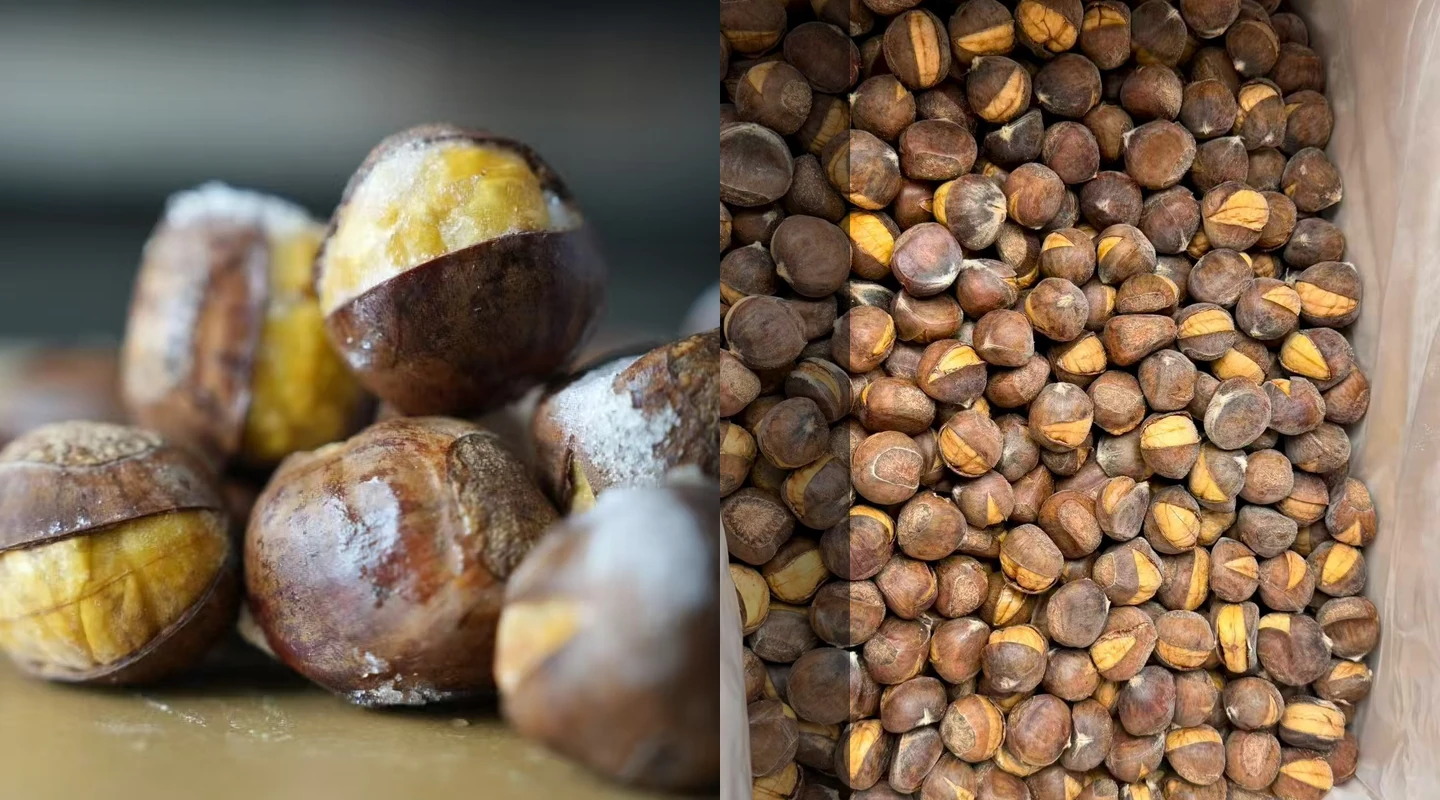
In-shell fresh chestnuts are limited by the harvest season, usually concentrated in the market from September to November each year; in other months they are either out of stock or rely on inventory. Yet Qianxi GI chestnuts can be processed intoiced chestnut (frozen) and peeled chestnut kernel, supplied stably year-round, not limited by the fresh-chestnut season. This means buyers can plan production and replenish steadily throughout the year, without being forced to make the entire year's purchasing decisions within just two months.
For overseas buyers, the value of Qianxi GI is not in the words 'tastes better,' but in three things holding true at once: traceable origin, market perception already validated, and supply not held hostage by the season.
III. A Common Misconception: Does a Multi-Region Integrator = More Stable?
Some suppliers present themselves as 'multi-region integrators' that can supply chestnuts from Shandong, Hebei, and Liaoning alike. It sounds like more choice, but what truly matters to buyers is often two other things:First, whether quality is stable and traceable; blending different regions means flavor and specifications fluctuate batch to batch;Second, whether supply is uninterrupted year-round; if only in-shell fresh chestnut is sold, it is still essentially trapped by the Sept–Nov seasonal window. Qianxi GI takes the opposite approach — we do not run a stall that 'sells all of China's chestnuts,' but go deep on a single region and perfect the year-round-available forms.
IV. NINGLI's Positioning: Single-Region Specialist + Year-Round-Available Forms
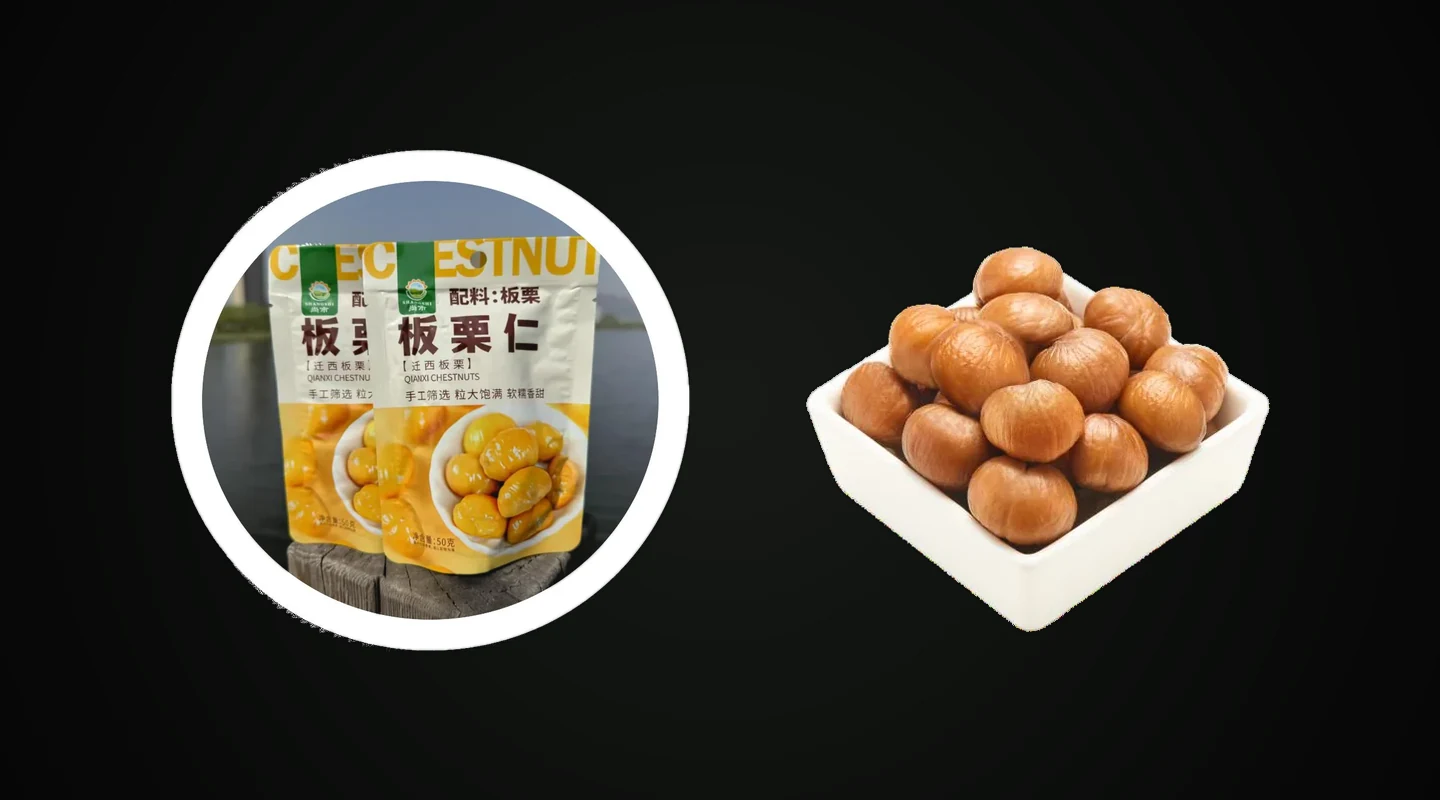
NINGLI handles the international business operations for the Qianxi GI dedicated region; the production and export registration entity is the factory side (Qianxi Rongtong, Shangshi), ensuring compliance and traceability. We focus on two core products available year-round:
View Organic Chestnut Kernel → View Iced Chestnut →
The organic chestnut kernel holds Chinese Organic certification (cert. 028OP2500081/082) and STAR-K Kosher certification, ready to use straight from the pouch; the iced chestnut comes from the same GI region, available year-round, not limited by the fresh-chestnut season. Together, they map exactly to what overseas buyers care about most: 'stable, compliant, and with a story.'
Closing
Choosing a region is, at its core, choosing a 'verifiable certainty.' What the Qianxi GI core region gives us is precisely the triple certainty of origin, perception, and supply. If you are looking for a stable, compliant, and story-rich supplier of China's geographically indicated chestnuts, we invite you to explore our chestnut and sweet potato ranges, or contact us directly to request samples and specifications.