Hongyao Sweet Potato: a variety originating from Japan, and how it grew its 'pinnacle of sweet and glutinous' in China
Hongyao sweet potato (Hongyao) is a leading premium honey sweet potato in China in recent years — orange-yellow flesh, fiber-free, with sugar content reaching 40–50 °Brix after curing. Little known is that it was originally a sweet potato variety originating in Japan, improved through Japanese breeding and cultivated at scale in China; today, as a premium raw material, it travels with China'sDried Sweet PotatoExported, back to Japanese shelves. A small cycle of varieties, terroir, and trade that epitomizes how Chinese agricultural products go global.
I. What Is Hongyao: The 'Sweet & Waxy Code' in Its Orange-Yellow Flesh
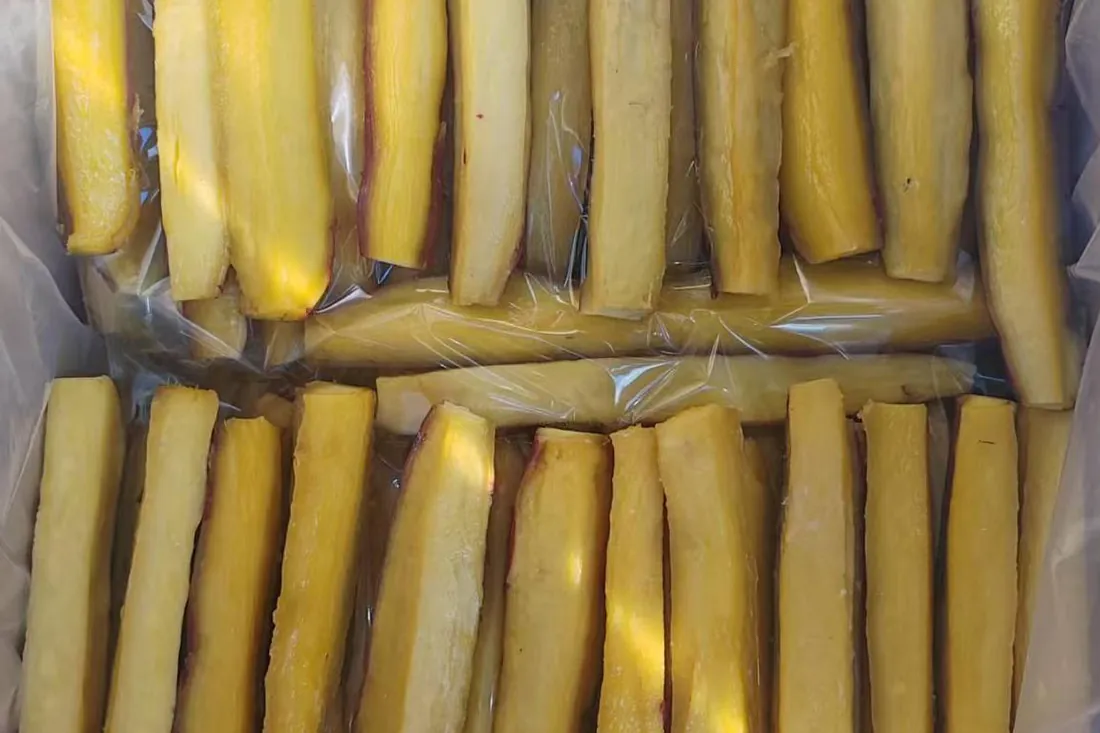
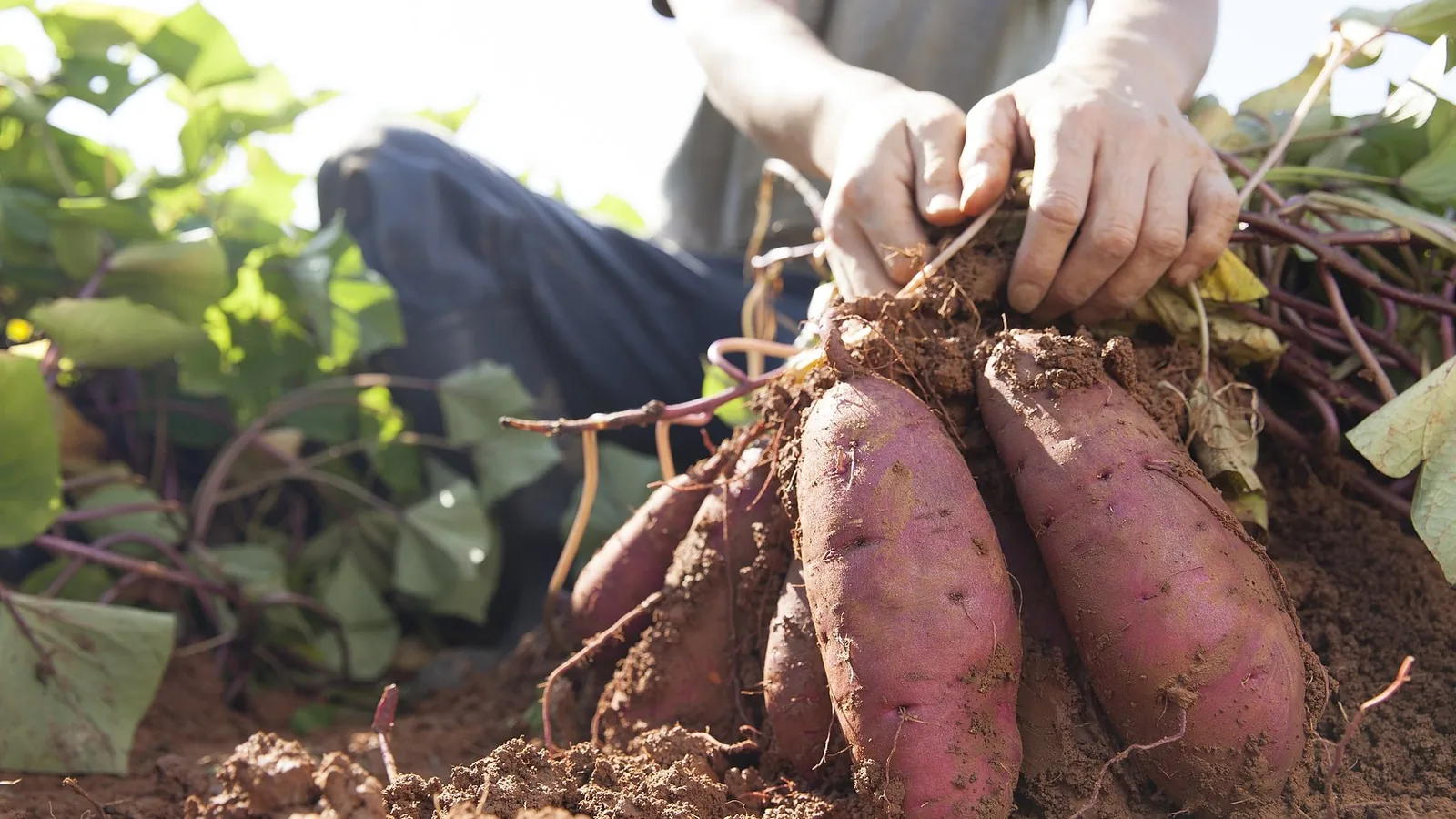
According to publicly available agricultural data, Hongyao has a well-proportioned shape, deep wine-red skin, and bright orange-yellow flesh, with a single tuber weighing about 300–500 g; after about 60 days of curing (cellar sweetening) of newly dug fresh tubers, sugar content can jump from around 30 °Brix to 40–50 °Brix, yielding a sandy, waxy, dense texture that is fiber-free, with a faint chestnut and fruity aroma. It uses virus-free first-generation seed seedlings and grows naturally,offering both fresh-eating and deep-processing value.
In Yuelong Town, Ninghe, Tianjin — known as the 'Hometown of Hongyao in China' — Hongyao has been introduced to high-altitude areas with successful yield trials, reaching sugar content above 50 °Brix (China Daily, 2026-09). This shows Hongyao's strong adaptability to different origins and lays the groundwork for scaled, standardized raw-material supply.
II. A 'Variety Homecoming': From Japan to China, Then Back to Japanese Shelves
Hongyao carries Japanese lineage in its genes — multiple sources describe it as a fine sweet potato variety originating in Japan, developed through Japanese breeding. Today, China is already a global powerhouse in sweet potato production and trade, while Japan isDried Sweet Potato (干し芋)a major import market that values origin and variety stories.
NINGLI's supply chain is one link along this route: based at its dedicated Qianxi factory, it processes dried sweet potato using premium raw materials such as Hongyao, relying on HACCP systems for full-process quality control, and has passed RCEP channels to export to the Japanese market in 2026. A variety originating in Japan, having crossed the sea full circle, returns to Japanese shelves as premium raw material grown at scale in China — a good variety knows no borders.
III. Why Hongyao Suits Dried Sweet Potato (Processing Perspective)
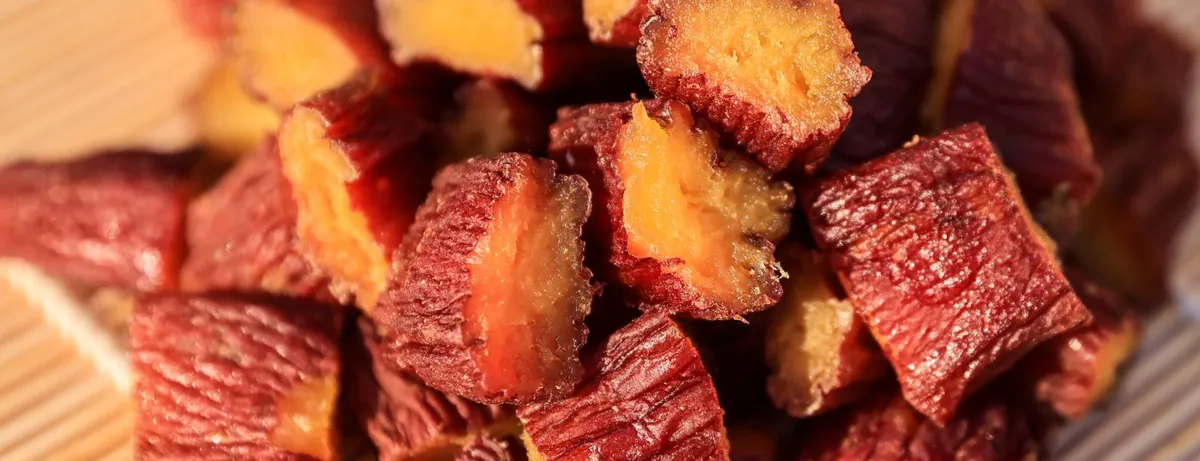
The texture of dried sweet potato is half craftsmanship and half raw material. Hongyao's high sugar content, low fiber, and orange-yellow flesh let it retain a sweet, waxy texture and attractive color even after dehydration — high-sugar raw material is the basis for a finished product that is 'sweet but not cloying,' while its fine, fiber-free flesh reduces texture loss during processing. (Note: specific processes and sugar-content performance are subject to the factory's actual conditions; this article focuses on varietal characteristics.)
This is also why NINGLI uses Hongyao as one of the core raw materials in its dried sweet potato product line: using a stable variety to support consistent flavor and shelf performance.
IV. How NINGLI Does It: From Variety to Compliant Export
For overseas buyers, the value of the Hongyao story is not novelty, but three points: first, traceable quality— variety, origin, and processing are controlled as one; second, trustworthy compliance— HACCP control, RCEP tariff preferences, and full traceability lower customs-clearance and food-safety risks; third, a story worth telling— 'a variety originating in Japan, raised by Chinese terroir' itself becomes a premium point on packaging and shelves, especially fitting the Japanese market that values origin culture.
LikeQianxi ChestnutQianxi Chestnut, variety and origin are the true source from which China's GI agricultural products go global.
Closing
A single Hongyao, from a Japanese variety to Chinese terroir, then back to Japanese shelves — what changes is only the distance; what stays the same is that sweet, waxy bite. If you are looking for a stable, compliant, and story-rich ChineseDried Sweet Potato (干し芋)supplier, we welcome you to learn about NINGLI's sweet potato series and OEM/ODM cooperation.
View dried sweet potato products → Contact NINGLI to get a quote